Before It's Too Late: A Real Plan for Capturing What Your Family Actually Knows
Here's a thing that happens in almost every family, and almost no one talks about until it's too late.
Someone passes away. The family gathers. And at some point, someone says, "I wish I had asked him how he did that," or "She was the only one who knew that story," or "I have no idea how this business actually ran before she retired."
Then everyone goes home. And the knowledge is just — gone.
We've been talking around this problem for years at Pcs, En & Grandson. The whole idea behind what we do here is that three generations of knowledge are better than one — but only if the knowledge actually gets transferred. And the uncomfortable truth is that most families are terrible at doing this intentionally.
This article is a practical guide to fixing that. Not a sentimental one. A practical one.
Why Good Intentions Aren't Enough
Most families genuinely intend to have the important conversations. "We should sit down with Grandma and record her recipes." "Dad knows everything about how this shop runs — we need to write that down." "Uncle Pete is the only one who knows where the property lines actually are."
And then life happens. Holidays end, everyone goes back to their routines, and the conversation gets postponed again. This isn't laziness — it's just how human beings work. Urgent things crowd out important things.
The solution isn't to try harder. It's to build a structure that makes capturing this knowledge easier than not doing it.
Start With What You're Actually Trying to Preserve
Before you pick up a camera or open a notebook, get specific about what you're trying to capture. Family knowledge falls into a few distinct categories, and each one requires a slightly different approach.
Procedural knowledge is the how-to stuff — recipes, repair techniques, business processes, craft methods. This is often the easiest to capture because it's concrete and demonstrable.
Contextual knowledge is the why behind the how. Why does the family business never extend credit beyond 30 days? Why does the recipe call for lard instead of butter? Why did the family move from one state to another in 1962? This is harder to capture because it lives in memory and interpretation, not just in steps.
Decision-making wisdom is the hardest of all — the accumulated judgment that lets an experienced person read a situation and know what to do. This is what experienced business owners mean when they say "you can't teach instinct." You actually can document it, but it takes deliberate effort.
The Formats That Actually Work
Video: The Gold Standard (With Caveats)
Video captures tone, expression, physical demonstration, and personality in a way nothing else does. For procedural knowledge especially — cooking, crafts, repairs — video is unbeatable. A two-minute clip of your grandmother making pie crust will teach more than three pages of written notes.
The caveat: video only works if someone actually watches it later. Raw, unedited footage sitting on a hard drive or a phone that eventually dies helps no one. Whatever you record, give it a title, a date, and a brief description, and store it somewhere the whole family can access. A shared Google Drive folder, a private YouTube channel, or a family-specific cloud storage account all work fine.
For the recording itself, you don't need anything fancy. A modern smartphone on a stable surface is completely sufficient. What matters more than equipment is asking good questions. Don't just let the camera roll while someone cooks — ask them to narrate. "Why are you doing it that way?" "What would happen if you skipped that step?" "How did you learn this?"
Audio: The Underrated Option
Audio recordings are underused in family preservation projects, and they shouldn't be. A voice memo app on your phone is all you need. Audio is less intimidating for older family members who freeze up in front of a camera, it's easier to do in a natural setting like a car ride or a kitchen conversation, and it captures storytelling in a way that feels more authentic than a formal sit-down interview.
For longer sessions, a free tool like Otter.ai can automatically transcribe audio recordings, which makes them searchable and easier to reference later.
Written Templates: The Scaffolding That Opens People Up
Blank pages are intimidating. Templates aren't. When you give someone a structured form to fill out — even a simple one — it lowers the barrier significantly.
Here's a basic template that works well for capturing a skill or technique:
- What is this skill or process?
- How did you learn it, and from whom?
- What's the most important thing to get right?
- What mistake do beginners always make?
- What would you want the next generation to understand about this that they might not think to ask?
That last question is the most valuable one. It surfaces the things people don't know they know — the tacit wisdom that never gets shared because it seems too obvious to mention.
The Interview That Actually Works
If you're going to sit down with a family member for a dedicated knowledge-capture session, a few things make a real difference.
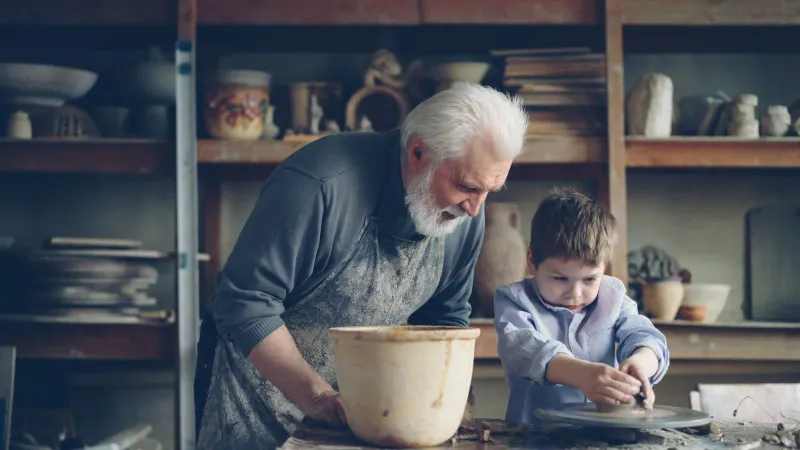
Do it in their space, not yours. People open up more in environments where they feel at home and in control. A grandfather's workshop, a grandmother's kitchen, a parent's office — these settings trigger memory and comfort.
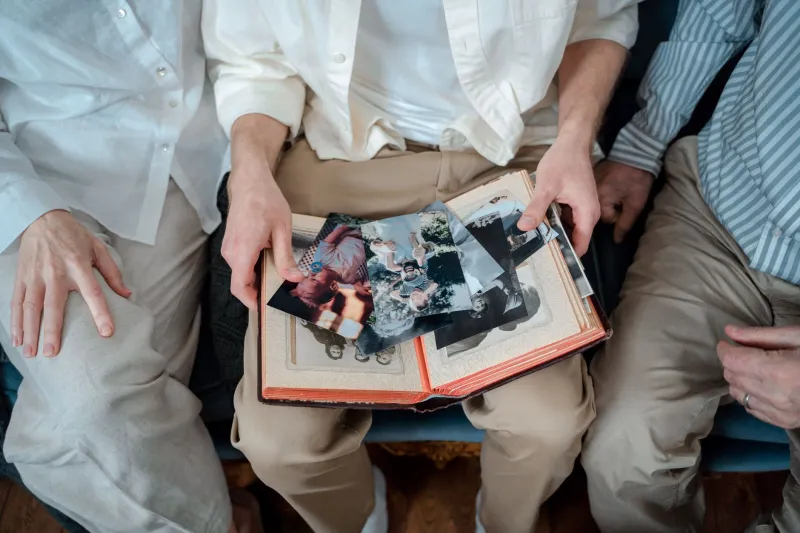
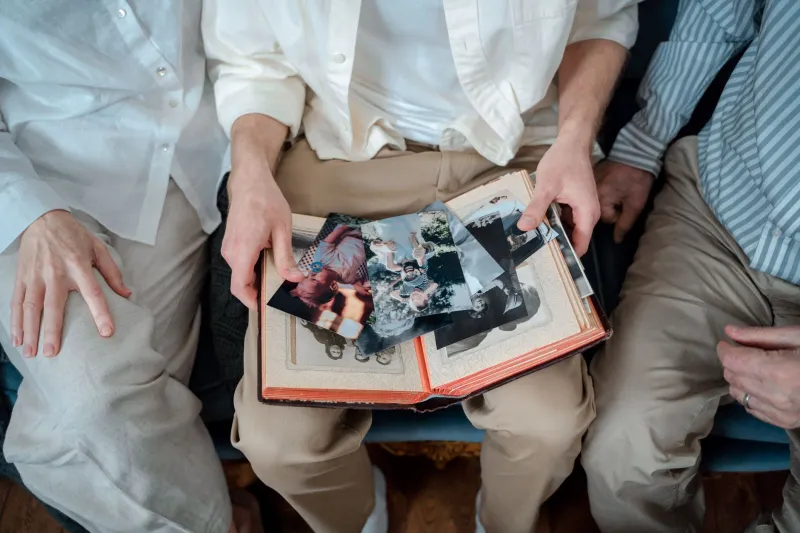
Bring something to look at together. Old photographs, tools, documents, or physical objects from the past are powerful memory prompts. "Tell me about this" is a better opener than "Tell me everything you know."
Ask about failures, not just successes. The decisions that went wrong, the lessons that came from hard experience — these are often the most valuable things to capture, and they're the stories that rarely get told unless someone specifically asks.
Making It a Habit, Not an Event
The families that do this well don't treat it as a project with a start and an end date. They build small knowledge-capture habits into regular life.
A quick voice memo after a meaningful conversation. A photo of a handwritten recipe card. A five-minute video of a repair technique before the repair gets done. A running document where family members add stories and techniques as they think of them.
None of these things take much time individually. But over months and years, they build something genuinely irreplaceable.
At Pcs, En & Grandson, we believe that legacy isn't just what you build — it's what you pass on. The knowledge your family carries is a resource, and like any resource, it requires some deliberate effort to preserve.
Start today. Ask one question. Record one answer.
That's all it takes to begin.