The Real Family Fortune: Why How You Were Raised to Think Is Worth More Than What You Were Left
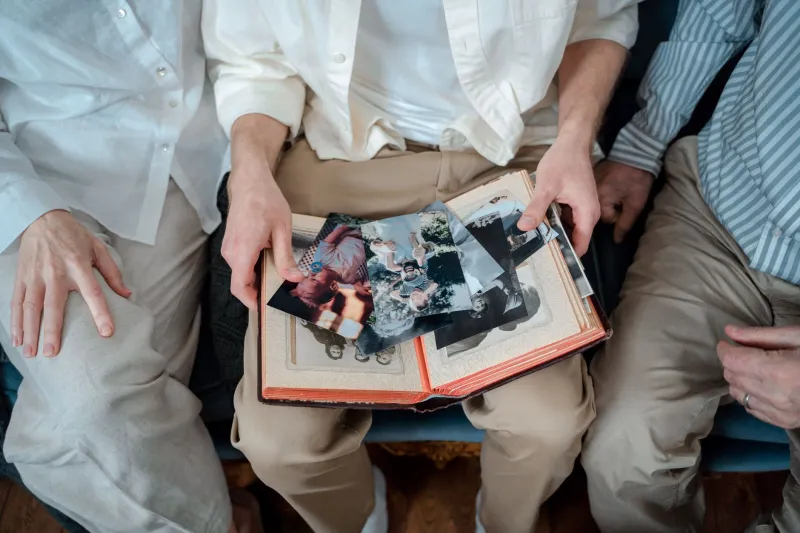
If you asked most people to describe their family's inheritance, they'd probably start with the concrete stuff. A house. A savings account. Maybe a small business or a piece of land. These are the things that show up in wills and get discussed with estate attorneys. They have dollar signs attached to them. They feel real in a way that's easy to measure.
But ask those same people what actually shaped how they operate in the world — how they make decisions under pressure, how they think about money, how they show up when things get hard — and almost none of them will point to the house or the savings account. They'll point to a person. A moment. A way of doing things that was so embedded in their upbringing that it took years to even notice it was there.
That's the inheritance nobody puts in the will. And in many ways, it's the one that matters most.
The Invisible Operating System
Every family runs on a kind of unwritten code — a set of assumptions, values, and approaches that govern how things get done. Researchers who study family systems sometimes call this the "family culture," but that phrase doesn't quite capture how deeply embedded it is. It's less like a culture and more like an operating system: it runs in the background, shapes everything, and most people don't even know it's there until something forces them to look at it.
This operating system includes things like:
- How your family defines a good day's work. Is it measured in hours? In output? In whether you gave everything you had?
- How your family responds to failure. Is it something to hide, analyze, learn from, or laugh about?
- How your family communicates when things are tense. Do people say what they mean? Go quiet? Talk around the problem?
- How your family thinks about money. As security, as freedom, as a scoreboard, as a tool?
- How your family treats people who work for them — or with them. What's the baseline expectation of respect, loyalty, and accountability?
None of this is written down anywhere. It's transmitted through observation, repetition, and the thousand small moments of growing up in a particular household. And it shapes outcomes — in business, in relationships, in financial decisions — far more than most people realize.
Why This Matters More Than Money
Here's a statistic that tends to stop people: according to research cited by the Williams Group wealth consultancy, roughly 70% of wealthy families lose their financial wealth by the second generation, and about 90% lose it by the third. The money doesn't hold. But the families that beat those odds — the ones that sustain not just wealth but functional, thriving enterprises across generations — almost universally have something else in common: a strong, intentional transmission of values, decision-making frameworks, and relational norms.
In other words, the families that keep it together aren't just passing down money. They're passing down a way of thinking about money, managing conflict, developing talent, and making hard calls. The financial inheritance is almost secondary to the operational one.
This is something that family businesses often understand intuitively, even if they don't articulate it this way. The reason a third-generation family business feels different from a first-generation one isn't just experience — it's accumulated relational and philosophical infrastructure. It's the fact that everyone in the building has been shaped, to some degree, by the same set of foundational assumptions.
The Problem Is, Most Families Don't Know They Have It
The tricky thing about an invisible operating system is that it's invisible. Most families don't sit down and consciously decide how they'll approach conflict, or what their standard for quality will be, or how they'll define loyalty. These things develop organically, shaped by the founders of the family — often the grandparents or great-grandparents — and then absorbed by subsequent generations without much examination.
This means that the most valuable parts of a family's legacy can disappear without anyone noticing. When the matriarch who held a certain standard passes away, or when the family business is sold and the next generation disperses, the operating system that made that family distinctive can dissolve within a generation — not because anyone rejected it, but because it was never made explicit.
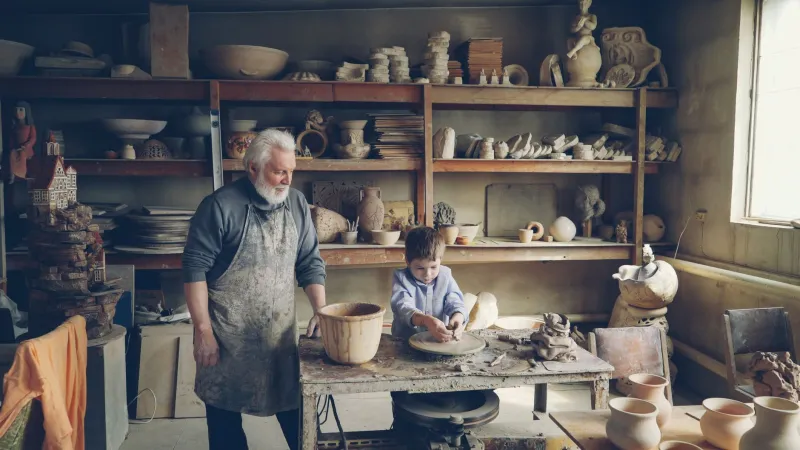
At Pcs, En & Grandson, this is something we feel in our bones. The way we approach a project, the way we talk to a customer, the way we decide when something is good enough and when it needs to go back to the bench — none of that came from a business book. It came from watching people who cared deeply about how they did things, not just what they produced.
Making the Invisible Visible
The good news is that this kind of inheritance can be documented — and doing so is one of the most valuable things a family or family business can undertake.
This doesn't mean turning your family values into a corporate mission statement (please don't). It means having real conversations — ideally recorded or written down — where the senior generation articulates the why behind the way they operate. Not just "we always do it this way" but "here's what we learned when we didn't."
Some practical starting points:
Ask about the hard decisions. The moments that reveal a family's operating system most clearly are the ones where there was no easy answer. How did your grandfather decide whether to take on debt to expand? How did your mother handle an employee who was loyal but underperforming? The reasoning behind those decisions is the real inheritance.
Document the standards. What does "good enough" mean in your family? What does "shoddy work" look like? These standards are often deeply felt but rarely spoken aloud. Getting them on paper — or on video — gives the next generation something to measure against.
Talk about failure. The stories families tell about their failures are often more instructive than the success stories. They reveal how the family thinks about resilience, accountability, and recovery. They're also often the stories that get buried, which is exactly why they're worth excavating.
Name the values explicitly. Not as a list of adjectives on a poster, but as stories. "We're honest with customers even when it costs us" means a lot more when it comes attached to a specific instance where honesty cost something real.
Succession Is About More Than Ownership
For family businesses thinking about succession planning, this reframe is critical. The most common approach to succession focuses on ownership transfer — who gets the shares, who takes the title, who signs the checks. These things matter. But they're not sufficient.
A business can change hands perfectly from a legal and financial standpoint and still lose the thing that made it worth having. If the new generation doesn't understand the relational and philosophical infrastructure that the business was built on — if they don't know why certain decisions get made the way they do, or what the family's non-negotiables actually are — they're flying without instruments.
The families and businesses that get succession right are the ones that treat the transfer of values and operating principles as seriously as they treat the transfer of assets. Sometimes more seriously.
The Legacy Worth Protecting
Financial wealth is fragile. It can be lost through bad luck, bad decisions, or simply the passage of time and the distribution across generations. But a family's way of thinking — its approach to work, to people, to problems, to standards — is potentially perpetual. It can be transmitted indefinitely, as long as someone keeps transmitting it.
The families that understand this tend to be the ones that last. Not just in business, but as families — coherent, functional, connected across generations in ways that go deeper than shared last names.
What your grandparents gave you might not show up on a balance sheet. But if you're lucky, it shows up every day in how you work, how you decide, and how you treat the people around you. That's not a small thing. That might be everything.