Why Grandpa's Workshop Is Going Viral: The Old Skills Gen Z Can't Stop Watching
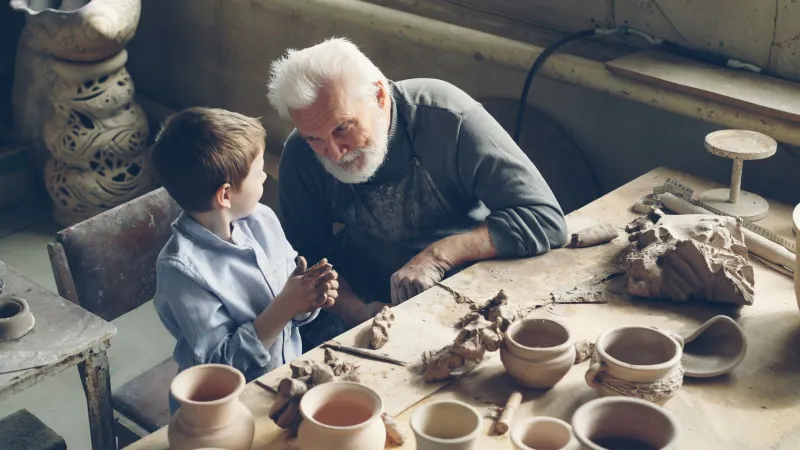
Somewhere between a TikTok algorithm and a dusty toolbox in a garage in rural Ohio, something quietly extraordinary happened. A 22-year-old named Marcus filmed himself asking his grandfather how to cut a dovetail joint — the kind of joint that holds a drawer together without a single nail or screw. He didn't expect much. Maybe a few dozen views from family members. Instead, the video hit 1.4 million views in four days.
Marcus isn't alone. Across the country, a generation raised on instant delivery and digital everything is turning toward the slow, the tactile, and the inherited. And the people they're turning to? Grandparents who spent decades quietly keeping these skills alive in basements, kitchens, and backyard sheds.
The Comeback Nobody Predicted
Let's be honest — for a while there, it looked like these trades were on their way out. Woodworking, leathercraft, home repair, preserving food, sewing from a pattern — these were things your grandparents did because they had to. Then came affordable furniture, pre-made everything, and the idea that learning a trade was somehow a lesser path.
But the internet has a funny way of flipping cultural scripts. Search "hand-cut joinery" or "sourdough from scratch" or "leather wallet DIY" on any platform right now, and you'll find creators with massive followings doing exactly what skilled tradespeople and home crafters have done for generations. The difference is the camera.
What's driving this? A few things are converging at once.
First, there's the authenticity angle. Gen Z has grown up surrounded by polished, sponsored, algorithmically optimized content — and a lot of them are exhausted by it. Watching someone's actual grandfather explain how to sharpen a hand plane, complete with a thick accent and a shop apron that's clearly seen better days, hits differently than a perfectly lit tutorial. It feels real.
Second, sustainability isn't just a buzzword for younger consumers — it's a genuine value. Learning to repair a leather belt instead of throwing it away, or building furniture that'll last fifty years instead of buying a flat-pack that won't survive a second move, aligns with how a lot of young people want to live. The old ways, it turns out, were pretty green.
The Creators Bridging the Gap
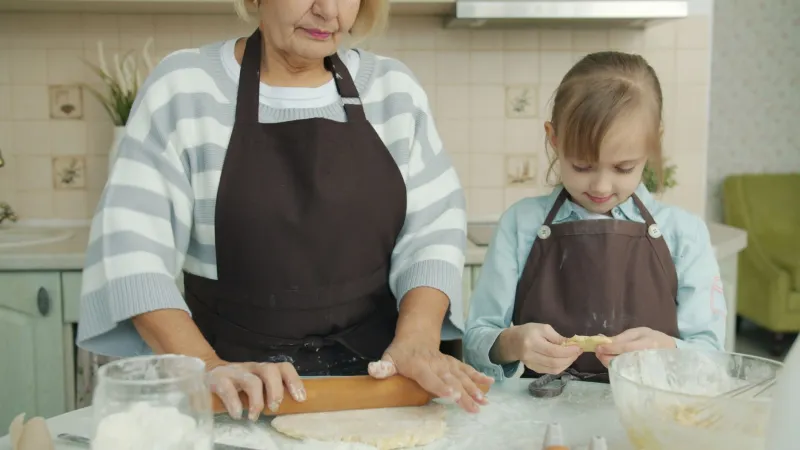
Take Destiny, a 24-year-old from rural Tennessee who started posting videos of herself learning to cook from her grandmother two years ago. "My grandma has been making biscuits the same way since 1971," Destiny says. "No measuring cups, no timers — just feel. I kept thinking, what happens when she's gone and I never learned this?"
That question — what happens when she's gone — is showing up everywhere in this space. It's less about nostalgia and more about a dawning awareness that certain kinds of knowledge don't live in books or YouTube tutorials. They live in people. And people don't last forever.
Destiny's channel now has over 200,000 followers. Her most-watched video isn't a recipe — it's a 12-minute clip of her grandmother explaining why she learned to preserve vegetables during a winter when the family couldn't afford to lose any food. "People don't just want to learn the skill," Destiny says. "They want the story behind it."
That tracks with what we see in our own family. The how is always wrapped up in the why, and the why is where the real value lives.
What Families Are Actually Getting Out of This
Beyond the view counts and follower numbers, something more meaningful is happening inside these families. Skills that were on the verge of being lost entirely are getting documented, practiced, and passed on — sometimes for the first time in decades.
Marcus says his grandfather had essentially stopped woodworking after his kids grew up and showed no interest. The viral video changed that. "He's back in the shop every weekend now. He's teaching me, I'm filming it, and my little brother started coming too. My grandfather told me it's the most useful he's felt in years."
That's not a small thing. The transfer of craft knowledge between generations has always required proximity and patience — two things that modern life doesn't hand out freely. Social media, for all its problems, is creating a new kind of proximity. A grandfather in Montana can teach a granddaughter in Florida how to read wood grain. A great-aunt in Louisiana can walk her nephew through the exact spice ratios she's been using since before he was born.
The Sustainability Piece Is Real
It's worth spending a moment on why sustainability is such a driver here, because it connects directly to the appeal of these older skills.
The repair-don't-replace philosophy that most older Americans grew up with — born partly from necessity and partly from a different relationship with objects — is having a major cultural moment. Right to repair legislation is making headlines. Thrift stores are trending. "Slow living" is a whole aesthetic category.
In that context, a grandfather who knows how to resole a boot, refinish a table, or rewire a lamp isn't just a charming relic. He's ahead of the curve.
What This Means for Families Like Ours
At Pcs, En & Grandson, this trend feels personal — because it is personal. The whole premise of what we do here is built on the idea that three generations of knowledge, skill, and perspective are worth more than any one of those generations working alone.
If you've got an older family member who carries a skill you've never bothered to learn, now is genuinely a good time to change that. Not because it might go viral (though it might), but because the window is real and it doesn't stay open forever.
Ask the question. Pick up the tool. Record the conversation.
You might be surprised how many people are waiting to watch — and learn — right alongside you.